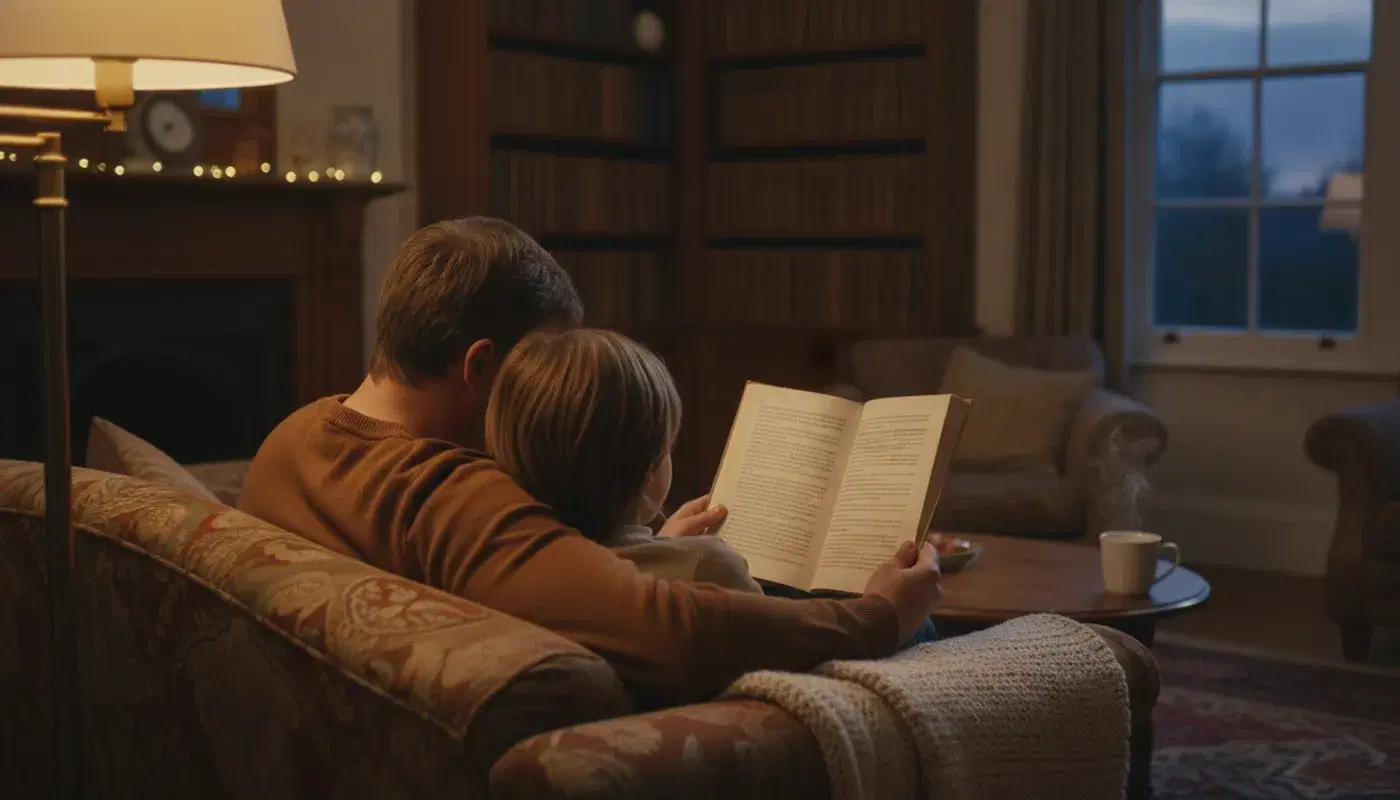
Reading With Your Child: Building the Daily Habit
A calm, practical guide for Newcastle parents of primary school children on making reading together a daily habit, with low-pressure tips and the local libraries, reading challenges and resources that help.
Reading sits underneath almost everything else at primary school, from following a maths question to enjoying a history topic. The habit that makes the biggest difference is a surprisingly small one. BookTrust, the UK's children's reading charity, puts it simply: spending just ten minutes a day reading with your child can make a real difference. This guide is about making those ten minutes happen most days without a battle, and about the Newcastle libraries and resources that help.
Find a regular slot
Habits stick when they are attached to something that already happens. For many families that is bedtime, but a book over breakfast or ten minutes after tea works just as well. The point is that it happens at roughly the same time most days, so nobody has to decide whether to do it.
A relaxed ten minutes most days does far more than an hour squeezed in on a tired Sunday, and on busy days a single page still keeps the habit alive. BookTrust also suggests weaving books into things your child already enjoys, so a book about birds after a walk in Jesmond Dene makes reading feel like part of life rather than a chore.
Keep reading aloud, even to fluent readers
It is tempting to stop reading to children once they can read for themselves. BookTrust's advice is to carry on. Being read to lets children enjoy stories a little beyond what they can manage alone, hear how expressive reading sounds, and meet vocabulary they would not find in their school reading book.
A good rhythm is to share it: your child reads their school book to you, then you read a chapter of something longer to them. Plenty of children in Years 5 and 6 still love being read to. And do not worry about "babyish" favourites, as rereading a familiar book builds fluency and confidence.
Let them choose
Children read more when they have chosen the book. A comic, a joke book, a football annual, a book about volcanoes or a series they have read three times already: all of it is reading. The aim at this stage is a child who wants to pick up a book, and the stretch can come later.
This is where Newcastle's libraries come into their own. Anyone can join Newcastle Libraries for free, and members can borrow from 14 libraries across the city. Children aged 13 and under sign up in person with permission from a parent or guardian, so pop into your nearest branch together. The City Library on New Bridge Street West is the biggest, with books for adults and children and regular family activities, but your local branch is often the easiest place to make a fortnightly visit part of the routine. If a book turns out to be a dud, it simply goes back.
Talk about the book
Reading together is not a comprehension test, but a little conversation helps children understand and remember what they read. Keep the questions open: what do you think will happen next? Why did she do that? Would you have done the same? Sharing your own reactions shows that adults think about books too.
If your child's school sends home a reading record, BookTrust suggests using it to communicate with the teacher rather than as a tick box. A short note that your child loved a book, or struggled with a certain kind of word, is useful to them. If you are unsure how to help with phonics, the class teacher is the best person to ask.
Audiobooks and reading in everyday life
Audiobooks are a brilliant addition to the habit, not a cheat. They let children enjoy stories above their reading level, suit car journeys, and can hook reluctant readers on a series they then want to read on paper. Newcastle Libraries members can borrow eBooks and eAudiobooks on their own device through BorrowBox.
Reading also happens well away from books. Recipes, menus, the Metro map, cereal boxes and the instructions for a new game all give children short, purposeful bits of reading, and asking your child to read out the next stop quietly builds confidence. If you want more ideas, the National Literacy Trust's Words for Life website has tips, book lists and activities for families, including a section for older primary children. For spelling, which grows alongside reading, our guide to helping your child with spelling has practical ideas too.
The Summer Reading Challenge and Seven Stories
The long summer holiday is when reading habits can slip, and the Summer Reading Challenge is designed to stop that. Developed by The Reading Agency and delivered with public libraries, it is a free holiday activity for children aged 4 to 11, who can read anything they like. In England it starts in early July (the 2026 challenge launched on 4 July), and Newcastle's libraries have run it in recent summers, so ask at your branch as the holidays approach.
Newcastle also has something few cities can match: Seven Stories, the National Centre for Children's Books, a free-entry visitor centre and museum in a converted Victorian mill on Lime Street in the Ouseburn Valley. Building improvement works are planned over the coming months, though Seven Stories says it will remain open, so check its website before you go. A visit shows children that the books they love are made by real people.
A helpful extra
If your child enjoys a bit of screen time alongside their reading, StarKids, our own learning app, is one option to look at. Its Daily Quest covers spelling and literacy alongside maths, telling the time, geography and even reading music, with teach-first cards that explain an idea before asking questions. The difficulty adapts to your child, with parent-approved level-ups so they only move up when you are happy they are ready, and there is a demo with no account needed, so you can see whether it suits your child before committing to anything. You can take a look at StarKids and decide for yourself. It is a supplement, though, and it does not replace sitting down and reading real books together.
When to get a bit more help
Every child learns to read at their own pace, so try not to compare too closely with classmates or siblings. If your child is finding reading genuinely hard or losing confidence, start with a quiet word with their teacher, who can explain where they are and what to practise. Our homework help guide for parents covers supporting learning at home, and if one-to-one support would help, you can browse local tutors. Whatever route you take, keep the daily reading warm, short and enjoyable. A child who links books with a cosy ten minutes with you is a child who will keep reading.
Never miss what’s on
Join the fortnightly NewcastleCity.live digest: the best events, news and local tips, straight to your inbox. One email a fortnight.
What's On
Little Angels
7:00 PM · O2 City Hall Newcastle, Northumberland Road, Newcastle upon Tyne, NE1 8SF
Rape Crisis Tyneside and Northumberland Quiz Night
7:30 PM · The Cumberland Arms, James Place Street, Ouseburn, Newcastle upon Tyne NE6 1LD
A Play, A Pie and A Pint: Making Way
1:00 PM · Stage 2, Northern Stage, Barras Bridge, Newcastle upon Tyne NE1 7RH