Historic Trades and Crafts of Newcastle
Coal, keels, glass, pottery and the engines that changed the world. A guide to the trades and crafts that built Newcastle, and where to see their legacy today.
Newcastle grew rich on things it dug, made and shipped. For centuries the trades along the Tyne set prices in London and armed navies around the world, and a handful of them were genuinely first of their kind. This guide runs through the crafts and industries that shaped the city, the guilds that controlled them, and the places in and around the centre where you can still trace what was made here.
Coal and the Hostmen
The phrase "carrying coals to Newcastle", meaning a pointless errand, was already in use by the late sixteenth century, which tells you how completely the town was identified with its one great export. It is first recorded in 1583, and the historian Thomas Fuller helped popularise it in 1661.
The coal trade was not open to all. It was controlled by the Hostmen, a body that grew out of the older Company of Merchant Adventurers and was formally incorporated by a charter from Elizabeth I in 1600. In return for a duty of a shilling per chaldron shipped, the Hostmen held a monopoly over loading coal onto the seagoing colliers, and that grip on the trade made them the wealthiest and most powerful men in the town for the best part of two centuries. Many of the town's merchant guilds, the incorporated companies or "mysteries", elected the mayor and ran civic life; the Hostmen sat at the top of that pile.
The keelmen of the Tyne
Before the river was deepened, big colliers could not reach the staithes where coal was tipped. The gap was bridged by the keelmen, who worked the keels: broad, flat-bottomed boats that ferried coal downriver from the staithes to the waiting ships. It was hard, dangerous and seasonal work, and the keelmen formed one of the tightest communities on Tyneside.
Their most remarkable monument still stands on City Road. The Keelmen's Hospital was built in 1701 as an almshouse for sick and aged keelmen and their families, and what makes it extraordinary is that the keelmen paid for it themselves, each crew contributing a penny a tide from their wages. The handsome brick building around a courtyard served its purpose for three centuries.
Best for: The Keelmen's Hospital on City Road is one of the few buildings in Britain raised entirely by the subscriptions of the working men it was meant to shelter.
Glass and pottery
For a time in the eighteenth century the Tyne was one of the great glassmaking rivers of Europe, and around 1760 Newcastle was among the largest glass centres anywhere. The trade gave its name to the "Newcastle light baluster", an especially elegant, slender wine glass of the mid-eighteenth century, though scholars now think many of these were engraved in the Netherlands from glass blown on both sides of the North Sea. Enamel decoration was a local speciality: William and Ralph Beilby worked in the town, and it was Ralph Beilby who took on a young apprentice named Thomas Bewick.
Pottery was the other great ceramic trade, and its home was the Ouseburn Valley. The Maling firm moved its works to Newcastle in 1817 and expanded relentlessly through the nineteenth century, mechanising production to turn out marmalade jars, ink bottles and storage containers by the million. At its height the firm's Ford works claimed to be the largest pottery in the world, covering a site the size of several football pitches, and it kept going until 1963. You will still find Maling ware in local antique shops and in the city's galleries.
Engineering and the railways
If one trade made Newcastle famous worldwide, it was engineering. In 1823 George and Robert Stephenson, with Edward Pease and Thomas Richardson, opened Robert Stephenson and Company on Forth Street, the first works in the world set up specifically to build railway locomotives. Its engine Locomotion hauled the world's first public steam passenger train on the Stockton and Darlington Railway in 1825, and for years afterwards the Forth Street works supplied locomotives across Britain and abroad.
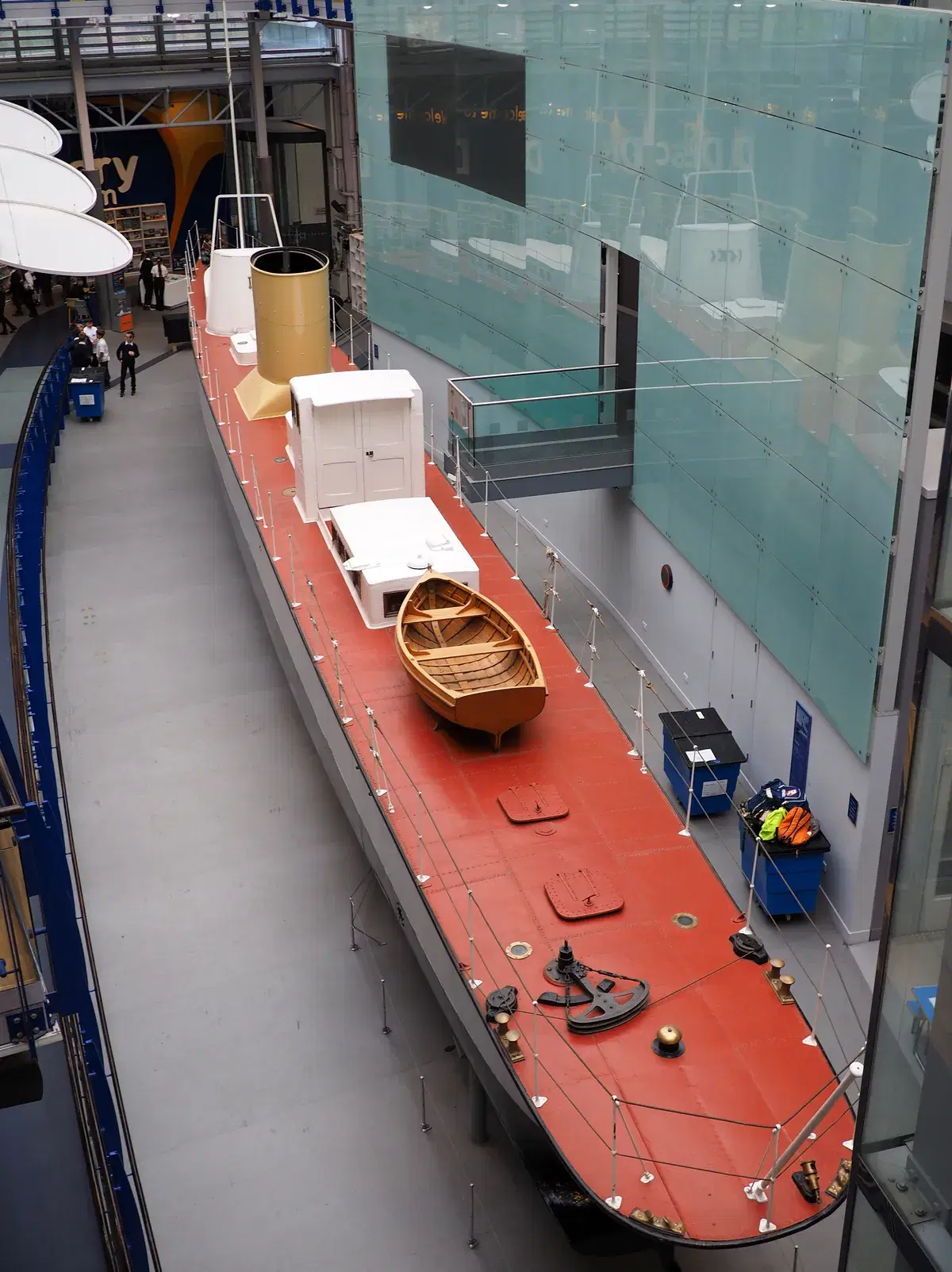
The Tyne then became a shipbuilding and armaments powerhouse. William Armstrong founded his Elswick works in 1847, beginning with hydraulic cranes and going on to build warships and artillery that were sold around the world. Hawthorn Leslie grew from the Hawthorn brothers' engine works, founded on Forth Banks in 1817, into a major builder of ships and marine engines. And it was here that Charles Parsons proved the steam turbine at sea: his experimental vessel Turbinia, launched on the Tyne in 1894, was the first ship driven by steam turbines, and startled the Royal Navy by tearing through its 1897 fleet review faster than anything afloat.
Around these headline trades sat a supporting cast of crafts: ropemaking for the sailing fleet, with roperies such as the one at St Lawrence; lead manufacture, in which the Cookson family were prominent from the mid-nineteenth century; and Thomas Bewick's revival of wood engraving, whose finely cut illustrations for his History of British Birds and A General History of Quadrupeds set a standard still admired today.
Where to see the legacy
The best single stop is the Discovery Museum on Blandford Square, built around Turbinia herself, which fills a hall on the ground floor and anchors a wider story of Tyneside invention and industry. For the natural history that Bewick drew, and for a sense of the collecting culture of the industrial age, the Great North Museum: Hancock is a short walk north.
Best for: Start at the Discovery Museum for the engineering story, then head east to the Ouseburn for the potteries and the wagonway tunnel.
The Ouseburn Valley is where much of this history actually happened. The Maling potteries stood here, the Victoria Tunnel coal wagonway still runs beneath the streets, and the old industrial buildings now house studios and makers carrying on the district's crafting tradition. On the riverfront, the Newcastle Quayside was the stage for the coal trade, the Merchant Adventurers and the keels, and its warehouses and merchant houses still line the water.
For the intellectual side of the industrial story, the Literary and Philosophical Society on Westgate Road holds a bust of Bewick and was, in its day, a meeting place for the engineers and reformers who drove Tyneside's inventiveness; it was here in 1880 that a room was first lit publicly by Joseph Swan's incandescent lamp. Nearby, Newcastle Castle and the Grainger Market round out a walk through the older town, the market a working survivor of the trading city these industries paid for.
Spotted a trade or a maker we have missed, or a detail that needs correcting? Get in touch and let us know.
Local businesses mentioned
Discovery Museum
Blandford Square, Newcastle upon Tyne, NE1 4JA
Ouseburn Valley
Ouseburn Valley, Lime Street, Newcastle upon Tyne, NE1 2PQ
Newcastle Quayside
Quayside, Newcastle upon Tyne, NE1 3 (riverside from the Tyne Bridge east towards Ouseburn)
Grainger Market
Grainger Market, Grainger Street, Newcastle upon Tyne, NE1 5QQ
Literary & Philosophical Society
23 Westgate Road, Newcastle upon Tyne, NE1 1SE
Newcastle Castle
The Black Gate, Castle Garth, Newcastle upon Tyne, NE1 1RQ
Great North Museum: Hancock
Barras Bridge, Newcastle upon Tyne, NE2 4PT
Never miss what’s on
Join the weekly Newcastlecity.live digest — the best events, news and local tips, straight to your inbox. Free, one email a week.
What's On
Jack Rooke's Good Grief
7:30pm · Northern Stage, Newcastle
Fresh Thursday: 12V5 and Tim Shaw
7:00 PM · Cobalt Studios, 10-16 Boyd Street, Ouseburn, NE2 1AP
Ghosts of History: Halloween at Newcastle Castle
See booking · Newcastle Castle, Castle Garth, Newcastle upon Tyne, NE1 1RQ